Joon Kim is a sound artist who records and reconstructs sounds emerging from the city, nature, and the boundaries between them. His practice is grounded in soundscape and field study, and begins with transforming sounds collected from specific sites into spatial experiences. For him, sound is not merely an auditory object, but operates as a medium through which environment, time, and memory accumulate, thus shaping the very way in which a place is perceived.
He has consistently explored urban sites that are in continual transformation; where development and regeneration, rupture and tension coexist, including the Han River, Euljiro, Nanji Island, and the border regions of the DMZ. The sounds and images collected from these environments therefore reveal points in which human presence and absence, political tension, and ecological temporality intersect, henceforth rendering the otherwise invisible layers of the environment perceptible. In particular, by juxtaposing and reconfiguring sounds gathered from different times and places, he invites audiences to simultaneously experience multiple temporalities and spatial sensibilities.
Joon Kim’s practice foregrounds the structuring of the listening experience. He collects vibrations beyond the range of human hearing, electromagnetic signals, and environmental resonances through physical and electronic means, and reconfigures them into variable installation forms. This process reveals the flows and aftereffects of otherwise imperceptible environments that encourage the audience not to consume sound but rather to dwell within it and reattune their own sensory awareness. The artist defines this approach as the ‘visualization of hearing,’ through which sound becomes a means of reconfiguring the relationships between environment, perception, and cognition. In this context, his work extends beyond the mere representation of a specific site; it functions as a structure that invokes the accumulated time, environment, and human experience embedded within it, while sensorially articulating the intersections of geological conditions, ecology, and social context.
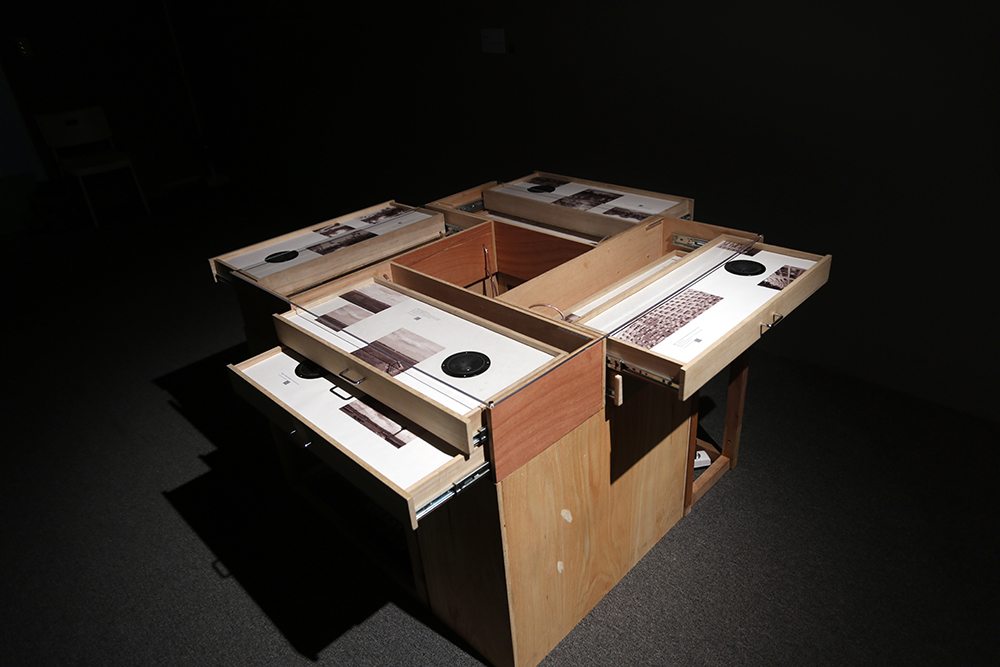
The representative work Feedback Field (2012) is based on site-specific research into Germany’s historical and socio-industrial context that explores the effects of invisible acoustic phenomena on the human body and perception. By translating electromagnetic signals and vibrations beyond the audible range into perceptual experience, the work demonstrates how sound can function as a fundamental element in shaping environmental awareness. Similarly, The Hidden Treasures (2025) draws on sounds collected from the civilian control zone near the DMZ and the Hantan River basin, correspondingly revealing ecological temporalities and landscapes preserved under the historical condition of division. Another work, Ecosystem: Signals of City, Signals of Nature (2018), arranges sounds gathered from diverse urban and natural environments into an archival structure by examining the acoustic characteristics of different locations and the sensory contrasts between them.
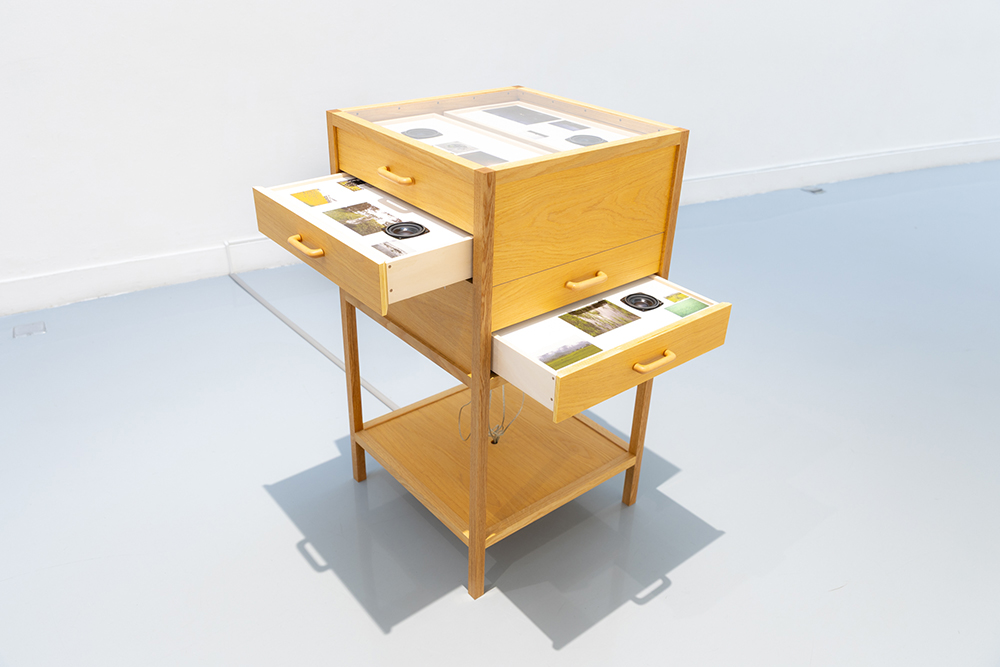
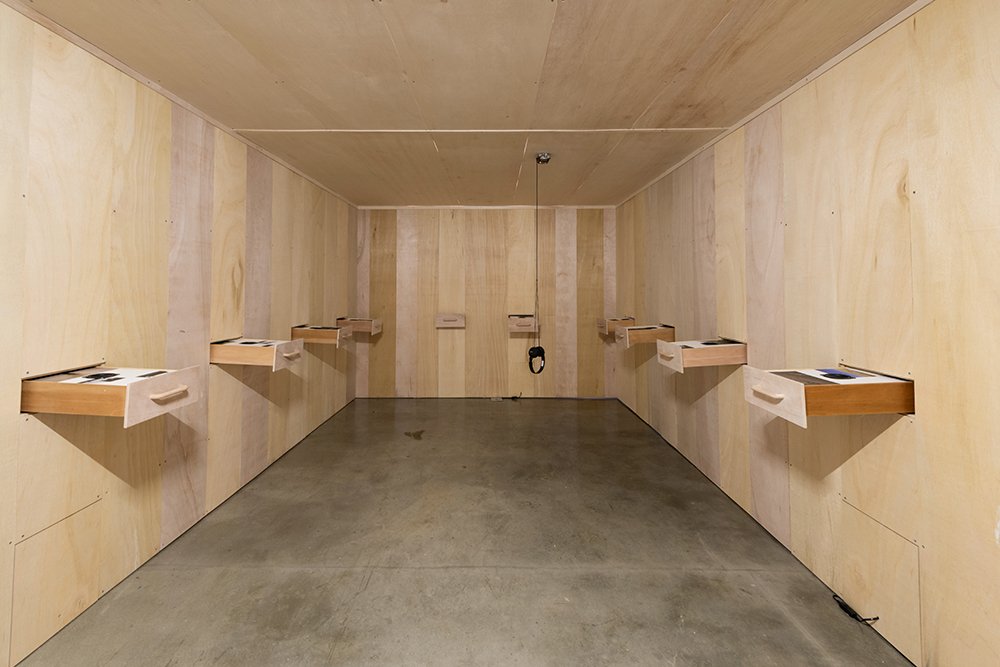
His earlier works were likewise developed around site-specific sound installations. Instant Landscape (2013) engages with and interprets Nanji Island as an artificial ecological environment, and reveals the paradox of a nature constructed by human intervention. The Phenomena of 51.482008–0.144344 (2015) explores the invisible layers of the city through sounds generated by urban infrastructural systems. Meanwhile, Breath (2014) investigates the relationship between architecture and sound by bringing to light the resonances and reverberations accumulated within disused architectural spaces. Taken together, these works extend toward an approach that, through sound, articulates not only the physical conditions of a site but also the layered dimensions of time and memory embedded within it.
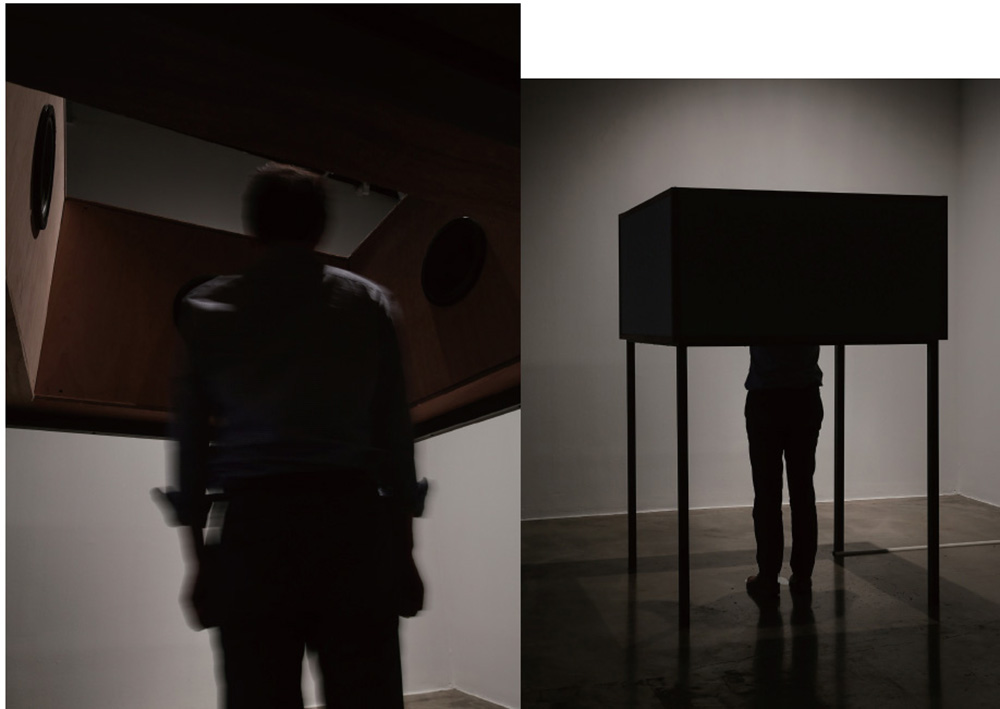
More recently, his practice has expanded to the ecological environments of the Ring of Fire, including the South Island of New Zealand and the forests of Australia. His investigations of the Wallace Line region, encompassing Bali and Lombok, have further developed into artistic explorations of soundscapes shaped by religious and cultural formations within the geographic boundary of volcanic islands. This trajectory consequently reflects his ongoing attempt to examine the intersections of geological conditions, ecology, and human life, thus guiding his work toward an increasingly expanded conceptual and spatial dimension.
Joon Kim has successfully held numerous solo exhibitions, such as Resounding Remnants (Seoul Street Arts Creation Center, Second Intake Facility, 2025), Echo Log: A Sonic Diary of Nature (KAIST Museum, 2025), Reservoir of Senses (Baik Art, 2024), and Tempest (SONGEUN Art Center, 2022). He has also participated in major exhibitions in Korea and internationally, such as Undo Planet (Bangkok Art and Culture Centre, Bangkok, 2025), Earth, Once More: Responding with a New Sensibility (Art Archive, Seoul Museum of Art, 2025), and Unnatural (Daecheongho Art Museum, 2025). Furthermore, he has undertaken residencies at institutions including the ACC International Residency (2023), Far East Residency in Gangneung (2024), Art Space Geumcheon (2019), and Nanji Residency (2012). He was awarded the Grand Prize at the SONGEUN Art Award in 2018.


